Hey there, fitness enthusiasts! Are you looking to supercharge your workouts, sculpt your physique, and embrace a more flexible, stronger you? If so, you’re in the right place. We’re diving deep into the world of best resistance bands for women, uncovering why these versatile tools are a game-changer for every fitness journey, whether you’re a seasoned gym-goer or just starting out. Forget bulky weights; resistance bands are here to prove that incredible strength and definition can come in a small, portable package.
What Are Resistance Bands and Why Are They a Must-Have for Women?
Resistance bands are elastic bands designed to provide tension and resistance during your exercises, challenging your muscles in a unique way. Think of them as your flexible, portable gym that fits right in your handbag. Their popularity among women has skyrocketed, and for good reason! They offer a fantastic alternative or complement to traditional weights, allowing you to build strength, improve flexibility, and tone your body without the need for heavy equipment.
One of the biggest advantages is their ability to offer “variable resistance.” This means the tension increases as the band stretches, providing a continuous challenge to your muscles throughout the entire range of motion of an exercise. This unique feature is incredibly effective for muscle activation and can lead to significant gains in strength and definition.
Different Types of Resistance Bands and How to Choose the Right Ones
Navigating the world of resistance bands can feel a bit overwhelming with so many options available. But don’t worry, once you understand the main types, choosing the best resistance bands for women becomes much clearer. The key factors to consider are style, tension range, material, and any extra accessories.
1. Mini Loop Bands (Booty Bands / Hip Bands)
These are short, continuous loops, often made from latex or fabric.
- Latex Mini Loops: Lightweight and offer good stretch, ideal for targeting smaller muscle groups and pre-workout warm-ups. However, they can sometimes roll up or pinch the skin during intense lower-body work.
- Fabric Mini Loops (Booty Bands): A fan favorite, especially for glute workouts! Made from woven fabric, these bands are wider, thicker, and designed to stay in place without rolling, pinching, or slipping. They offer higher resistance levels and are incredibly durable, making them perfect for squats, glute bridges, and hip abductions. If your goal is to build stronger legs and glutes, fabric booty bands are an excellent choice.
2. Long Loop Bands (Pull-Up Assist Bands / Power Bands)
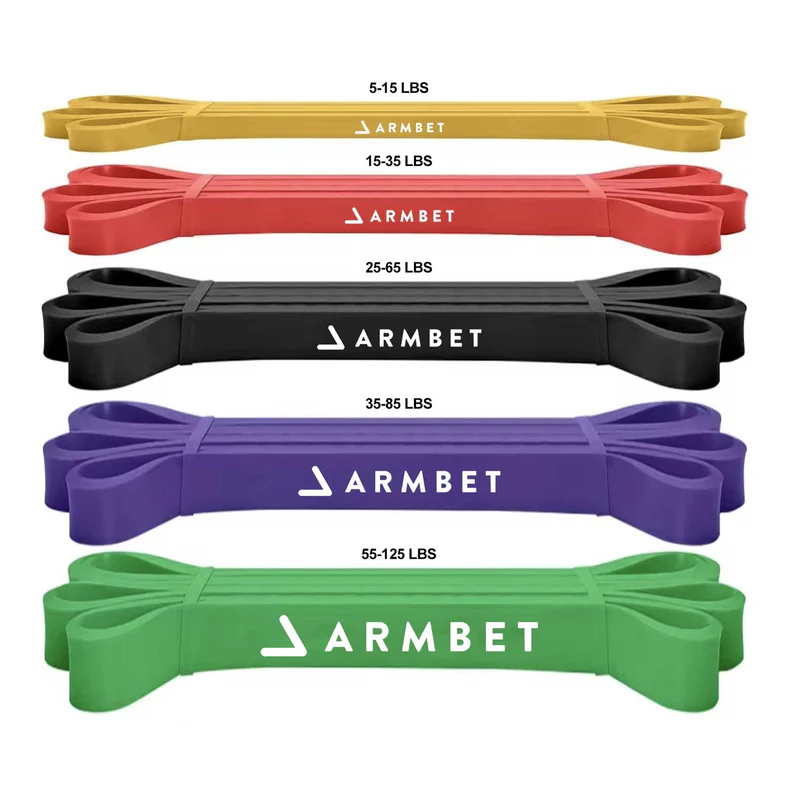
These are longer, thicker loops that come in various resistance levels. They are highly versatile and great for full-body workouts.
- Uses: Excellent for assisted pull-ups, adding resistance to squats, deadlifts, push-ups, and even stretching. The thicker the band, the more resistance (or assistance) it provides. They work well for larger muscle groups and compound exercises.
3. Tube Bands with Handles
These bands resemble elastic tubes with sturdy handles at each end, often coming with a door anchor and ankle straps.
- Uses: Mimic cable machine exercises, making them ideal for upper body workouts like bicep curls, tricep extensions, chest presses, and rows. They offer a comfortable grip and allow for a wide range of movements.
4. Flat Resistance Bands (Therapy Bands)
These are wide, flat, non-looped bands, typically offering lighter resistance.
- Uses: Primarily used for physical therapy, rehabilitation, mobility work, and gentle stretching. They are excellent for improving flexibility and range of motion.
How to Pick Your Perfect Band Set:
When building your collection of the best resistance bands for women, consider these tips:
- Start with a Set: Most experts recommend buying a set with varying resistance levels (light, medium, heavy). This allows you to progress as you get stronger and ensures you have the right tension for different exercises and muscle groups.
- Material Matters: For lower body exercises, particularly glutes, fabric bands are often preferred for their comfort and stability. For upper body, mobility, and explosive movements, latex bands can offer more stretch.
- Match to Your Goals: If your primary focus is glute activation and lower body toning, a good set of fabric booty bands is essential. If you want full-body strength and versatility, a set of long loop bands or tube bands with handles might be more suitable.
- Listen to Your Body: Begin with a lighter band to perfect your form, then gradually increase the resistance. “Always prioritize proper form over heavy resistance,” advises Dr. Evelyn Reed, a certified strength and conditioning specialist. “You’ll see much better results and stay injury-free in the long run.”
Effective Resistance Band Exercises for Various Muscle Groups
Resistance bands are incredibly effective for targeting almost every muscle group. Here’s a breakdown of some top exercises tailored to women’s fitness goals:
Lower Body & Glutes (Often a Key Focus for Women)
- Banded Glute Bridge with Hip Abduction: Lie on your back, knees bent, feet flat, a mini loop band around your mid-thighs. Lift your hips, squeeze your glutes, then press your knees out wide against the band. Lower with control. This is fantastic for glute activation.
- Clamshells: Lie on your side, knees bent, feet stacked, a mini loop band around your thighs. Keeping your feet together, lift your top knee towards the ceiling. Focus on squeezing your gluteus medius (side glutes).
- Lateral Band Walks (Monster Walks): Place a mini loop band around your ankles or just above your knees. Stand with feet hip-width apart, knees slightly bent. Take small, controlled steps sideways, maintaining tension on the band.
- Banded Squats: Loop a band above your knees. As you squat down, actively push your knees out against the band. This helps engage your glutes and maintain proper form.
- Kickbacks: Anchor a long loop band around a sturdy object or use an ankle strap with a tube band. Loop the other end around your ankle. Keeping your core tight, kick your leg straight back, squeezing your glute at the top.
Upper Body
- Banded Bicep Curls: Stand on a long loop band or anchor a tube band under your foot. Hold the band with palms facing up and curl your hands towards your shoulders, squeezing your biceps.
- Banded Tricep Extensions: Anchor a long loop band to a door or overhead. Face away, grab the band, and extend your arms downwards, engaging your triceps. Alternatively, stand on the band, hold it behind your head, and extend arms upwards.
- Standing Band Rows: Anchor a long loop band or tube band to a sturdy point. Pull the band towards your torso, squeezing your shoulder blades together. Great for back strength and posture.
Core
- Russian Twists with Band: Sit on the floor, knees bent, feet slightly off the ground. Hold a light resistance band taut with both hands. Twist your torso from side to side, engaging your obliques.
- Plank Leg Lifts: In a plank position, place a mini loop band around your ankles. Lift one leg a few inches off the ground, engaging your core and glutes. Alternate legs.
Tips to Maximize Workout Effectiveness and Avoid Injury
To truly get the most out of the best resistance bands for women and keep your workouts safe and effective:
- Prioritize Form: Always focus on executing exercises with correct form. A lighter band with perfect form is far more effective than a heavy band with sloppy technique.
- Warm-Up Properly: Incorporate dynamic stretches and light band work into your warm-up routine to activate muscles and prepare your body. A good warm-up can also improve mobility.
- Progressive Overload: As you get stronger, gradually increase the resistance. This can mean using a stronger band, increasing repetitions, or slowing down the movement to enhance time under tension.
- Control the Movement: Don’t let the band snap back! Control both the lengthening (eccentric) and shortening (concentric) phases of each exercise to maximize muscle engagement.
- Listen to Your Body: If you feel pain, stop the exercise. Resistance bands should challenge your muscles, not cause discomfort in your joints.
- Check Your Bands: Regularly inspect your bands for any tears or signs of wear, especially latex bands. Replace them if they show damage to avoid snapping during a workout.
Benefits of Training with Resistance Bands for Women’s Health and Fitness
Beyond muscle building, the best resistance bands for women offer a wealth of benefits for overall health and well-being:
- Build Strength and Tone Muscles: Resistance bands provide continuous tension, which is excellent for stimulating muscle growth and achieving a toned physique.
- Improve Mobility and Flexibility: By assisting with stretches and movements through a full range of motion, bands can significantly enhance joint mobility and overall flexibility, reducing stiffness and improving posture.
- Low Impact and Joint-Friendly: Compared to heavy weights, resistance bands put less strain on your joints, making them a safer option, especially for those with pre-existing injuries or beginners. They are fantastic for protecting bones and joints.
- Portable and Travel-Friendly: Their lightweight and compact nature means you can take your workout anywhere – to the park, on vacation, or simply use them in your living room.
- Cost-Effective: Generally much more affordable than dumbbells or gym memberships, making fitness accessible to everyone.
- Enhance Functional Fitness: Resistance band exercises mimic natural movements, helping you build strength and coordination for everyday activities like lifting, pushing, and pulling.
- Recruit Stabilizer Muscles: Bands are excellent at engaging smaller, often overlooked stabilizer muscles that support your larger muscle groups and joints, further reducing injury risk.
Integrating Resistance Bands into Your Daily Workout Routine
One of the greatest strengths of the best resistance bands for women is their adaptability. Here’s how you can seamlessly incorporate them into your fitness routine:
- Warm-Up Essentials: Use light mini bands for glute activation exercises before leg day or shoulder rotations before an upper body workout. This primes your muscles and prevents injury.
- Main Workout Power-Up: Add a long loop band to your squats or deadlifts for extra resistance. Use tube bands for a full upper body session, replicating gym machines at home.
- Finisher for the Burn: End your workout with a few sets of high-rep banded exercises to completely exhaust your muscles and maximize the burn.
- Stretching and Cool-Down: Utilize flat resistance bands to deepen your stretches, improve flexibility, and aid in muscle recovery.
- Travel Companion: Never miss a workout again! Pack a set of mini loops and long bands for effective hotel room or outdoor workouts.
Frequently Asked Questions (FAQ)
Q: Are resistance bands effective for building muscle in women?
A: Absolutely! Resistance bands provide constant tension throughout the exercise, which is highly effective for muscle stimulus and growth, similar to free weights but with less joint impact.
Q: What’s the main difference between fabric and latex resistance bands for women?
A: Fabric bands (often called booty bands) are typically wider, thicker, and designed not to roll, pinch, or slip, making them ideal for lower body exercises. Latex bands offer more stretch and are great for a wider range of motion, upper body work, and assistance exercises.
Q: How do I choose the right resistance level?
A: Start with a light resistance band to master proper form. If you can perform 15-20 repetitions with good form but feel challenged towards the end, that’s a good starting point. Gradually increase the resistance as you get stronger.
Q: Can I use resistance bands for a full-body workout?
A: Yes, definitely! With a combination of different types of resistance bands (mini loops, long loops, tube bands), you can effectively target all major muscle groups for a comprehensive full-body workout.
Q: Are resistance bands good for beginners?
A: They are excellent for beginners! They offer a controlled way to add resistance, helping you build strength and proper movement patterns without the intimidation or risk associated with heavy weights.
Q: How do resistance bands help with mobility?
A: Resistance bands can assist you in achieving a greater range of motion during stretches and exercises, gently encouraging muscles to lengthen and improving joint flexibility and overall mobility.
Q: Do resistance bands help with injury prevention?
A: Yes, they do. Resistance bands help strengthen stabilizer muscles and promote controlled movements, which can reduce strain on joints and lower the risk of injury during workouts and daily activities.
Embrace the Band Life for a Stronger You!
There you have it – a comprehensive guide to finding and utilizing the best resistance bands for women. These mighty yet humble tools offer an unparalleled blend of versatility, effectiveness, and convenience. From sculpting your glutes to strengthening your core and improving overall flexibility, resistance bands are a fantastic investment in your health and fitness journey. So, why not give them a try? Start experimenting with different types, find your perfect resistance, and discover a fun, effective way to build the strong, resilient body you’ve always wanted. Your fitness routine (and your muscles!) will thank you for it.
|
Our Picks for the Best Resistance Bands in 2026
As an Amazon Associate I earn from qualifying purchases.
|
||
| Num | Product | Action |
|---|---|---|
| 1 | Pull Up Bands, Resistance Bands, Pull Up Assistance Bands Set for Men & Women, Exercise Workout Bands for Working Out, Body Stretching, Physical Therapy, Muscle Training |

|
| 2 | Pull Up Assistance Bands, 5-Level Resistance Bands for Working Out, Pull Up Bands for Men & Women, Exercise Bands for Full-Body Training, Fitness, Physical Therapy, Stretch Workout Bands at Home, Gym |
|
| 3 | WHATAFIT Resistance Bands, Exercise Bands,Resistance Bands for Working Out, Work Out Bands with Handles for Men and Women Fitness, Strength Training Home Gym Equipment |
|
| 4 | HPYGN Resistance Bands, Exercise Bands with Handles, Fitness Bands, Workout Bands with Door Anchor and Ankle Straps, for Heavy Resistance Training, Physical Therapy, Shape Body, Yoga, Home Workout Set |
|
| 5 | LEEKEY Resistance Bands, Exercise Bands with Handles,Pull Up Assist Bands - Band Set with Door Anchor - Bands for Working Out,Band for Men and Women Fitness Training,Home Workouts |
|
| 6 | 2PCS Elastic Yoga Stretching Strap with Loops, Stretch Strap for Dance, Gymnastics Stretching Ballet Dance Bands, Adjustable Stretching-Bands, Multi-Loop Exercise Bands for Pilates, Latin and Yoga |
|
| 7 | Resistance Bands, Pull Up Assist Bands - Workout Bands, Eexercise Bands, Long Resistance Bands Set for Working Out, Fitness, Training, Physical Therapy for Men Women |
|
| 8 | VEICK Resistance Bands, Exercise Bands, Workout Bands, Resistance Bands for Working Out with Handles for Men and Women, Exercising Bands for Fitness Weights Work Out at Home |
|
| 9 | SUNPOW Pull Up Assistance Bands - Set of 5 Resistance Heavy Duty Workout Exercise Stretch Fitness Bands Assist Set for Body, Instruction Guide and Carry Bag Included |
|
| 10 | Multifunction Pedal Resistance Band with Handle, Upgraded Exercise Equipment with Soft Foot Pedal for Sit Up & Full-Body Home Gym Workouts, Core/ABS Training, Pilates, Yoga & Physical Therapy |
|