Picture this: you step onto the tee, club in hand, feeling strong, flexible, and ready to unleash a powerful, consistent swing. This isn’t just a golfer’s dream; it’s an achievable reality with the strategic use of Golf Resistance Bands. These simple, yet incredibly effective tools can transform your game, adding yards to your drive, improving accuracy, and even helping you stay injury-free. Forget bulky weights; resistance bands are your portable, versatile secret weapon for elevating your performance on the course.
What Are Resistance Bands and Why Are They a Golfer’s Best Friend?
Resistance bands are elastic bands designed to provide resistance when stretched, engaging your muscles in a way that free weights often can’t. Think of them as a portable gym that fits right into your golf bag. For golfers, their popularity isn’t just a trend; it’s rooted in their unique benefits. Unlike traditional weights that primarily load muscles on the way up, bands offer constant tension throughout the entire range of motion, mimicking the dynamic, fluid movements of a golf swing.
They’re incredible for golf because they allow you to train golf-specific movement patterns against resistance, building the strength, rotation, flexibility, and balance critical for a consistent swing. Plus, they’re low-impact, reducing stress on your joints, which is a huge bonus for active golfers.
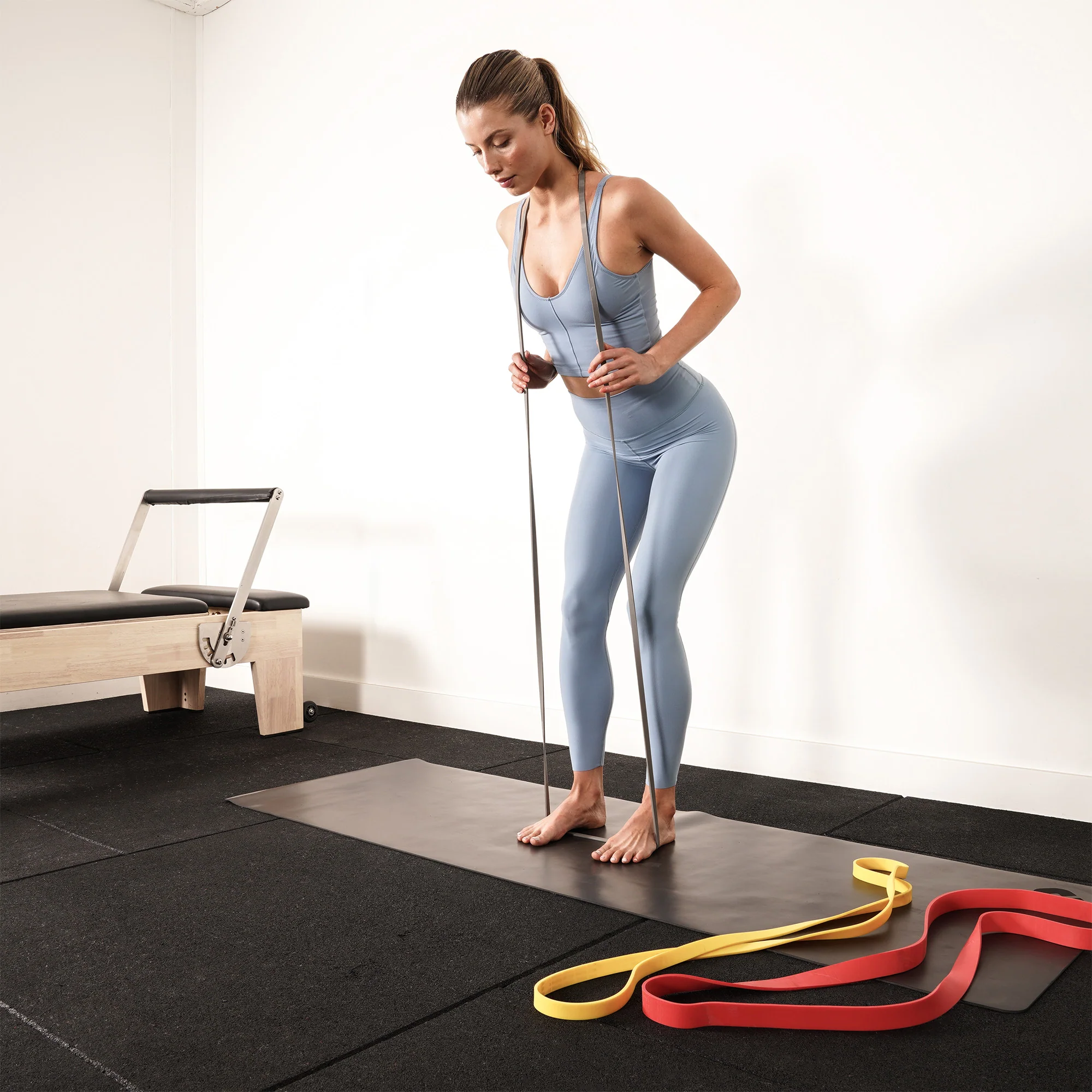
Picking the Perfect Partner: Types of Resistance Bands for Golfers
Choosing the right golf resistance bands is crucial for an effective workout. There are a few main types, each with its own advantages:
- Loop Bands (Mini Bands/Power Bands): These are continuous loops. Mini bands are shorter and often used for lower body and hip activation, while longer power bands are versatile for full-body movements, assisted exercises, and heavier resistance.
- Tube Bands with Handles: These bands feature soft handles at each end, making them comfortable for upper body pulling and pressing exercises, as well as rotational movements when anchored.
- Figure-8 Bands: Less common but useful for certain upper body and shoulder exercises due to their specific shape.
When it comes to resistance levels, bands typically come in light, medium, heavy, and even extra-heavy. A good starting point for the average golfer might be a medium band, but it’s wise to have a selection. You’ll want lighter bands for warm-ups and mobility work, and heavier ones for strength-building exercises. The key is to challenge your muscles without compromising your form.
Unleash Your Swing: Effective Resistance Band Exercises for Golf
Ready to integrate golf resistance bands into your routine? Here are some power-packed exercises designed to target key muscle groups for a stronger, more consistent swing.
Rotational Band Swing
How does this help my golf swing? This exercise directly mimics the rotational movement of your golf swing, building core strength and explosive power through your obliques and hips, which are vital for clubhead speed.
To perform it, attach a resistance band to a stable anchor at about waist height. Stand sideways to the anchor, holding the band with both hands in front of you. Engage your core and rotate your torso away from the anchor, mimicking your golf swing’s follow-through. Slowly return to the starting position, performing 10-15 repetitions on each side.
Banded Squat and Press
Why is this exercise important for golfers? This movement builds rotational and lower body power, essential for generating speed from the ground up and transferring it into your swing. It’s one of the best drills for increasing clubhead speed.
Anchor a resistance band around waist level. Hold the band with your hands about a foot apart. Squat down, and as you push up, rotate your body and press the resistance band out, making sure to explode out of the squat by pushing into the ground. Perform 3-4 sets of 6-10 explosive repetitions.
Lateral Band Walk
How do lateral band walks improve golf performance? This exercise targets your glutes and hips, crucial for maintaining stability throughout your swing and preventing sway. Strong hips mean a more stable base and better power transfer.
Place a resistance band around your legs, just above your knees. Stand with your feet shoulder-width apart and squat slightly. Step to the side, maintaining tension in the band, and then bring your other foot to meet the first. Continue stepping side-to-side for 10-15 steps in each direction.
Band Pull-Aparts
What are the benefits of band pull-aparts for golfers? This exercise strengthens your upper back and shoulders, promoting good posture and stability during your backswing and downswing, which can prevent rounding of the shoulders and ensure a smooth takeaway.
Hold a resistance band with both hands at shoulder height, arms extended in front of you. Keep your arms straight and pull the band apart, squeezing your shoulder blades together. Slowly return to the starting position. Aim for 10-15 repetitions.
Pallof Press
Why is the Pallof Press crucial for golf? This anti-rotation exercise is a fantastic core stabilizer, preventing unwanted twisting and sway during your swing. It builds the core strength needed to resist rotational forces, leading to a more centered and powerful turn.
Attach a band to a sturdy anchor at chest height. Stand perpendicular to the anchor, grasping the band with both hands in front of your chest. Press the band straight out in front of you, resisting the band’s pull to rotate your torso. Hold briefly, then slowly return to your chest. Perform 8-12 reps per side.
Swing Smarter, Not Harder: Maximizing Your Resistance Band Workouts
To get the most out of your golf resistance bands and keep injuries at bay, remember these tips:
- Focus on Form: Quality over quantity. Ensure each movement is controlled and executed with proper technique. It’s better to use a lighter band correctly than a heavy one with poor form.
- Controlled Movements: Resistance bands work both on the concentric (shortening) and eccentric (lengthening) phases of muscle contraction. Control the band as it returns to its starting position to maximize muscle engagement and prevent injury.
- Consistency is Key: Incorporate resistance band training into your routine 2-3 times a week. Regularity will yield the best results for strength, flexibility, and power.
- Warm-up and Cool-down: Always begin your workout with a light warm-up and end with some gentle stretches to improve flexibility and aid recovery.
“Resistance bands provide dynamic tension that perfectly mimics the forces at play in a golf swing,” explains Dr. Lena Karlsson, a sports physiotherapist specializing in golf fitness. “This allows golfers to build strength and stability through the exact movements they need on the course, leading to more efficient power transfer and reduced injury risk.”
Beyond the Green: Broad Benefits of Resistance Bands for Golfers
The advantages of training with golf resistance bands extend far beyond a few extra yards on your drive:
- Improved Swing Mechanics: By strengthening golf-specific muscles and movement patterns, bands help refine your take-away, transition, and follow-through, leading to a more repeatable and powerful swing.
- Injury Prevention: Strengthening supporting muscles around joints (shoulders, hips, knees, core) increases stability and resilience, helping to protect you from common golf-related injuries.
- Increased Range of Motion and Flexibility: Many band exercises involve stretching and controlled movements that improve your overall flexibility and the rotational capacity needed for a full, uninhibited swing.
- Overall Fitness and Strength: While targeting golf-specific movements, these bands also contribute to your general physical fitness, building foundational strength that benefits daily life.
- Enhanced Body Awareness: Working against resistance helps you become more attuned to how your body moves and where you might have imbalances, fostering a deeper mind-body connection crucial for golf.
Seamless Integration: Weaving Bands into Your Daily Golf Routine
The beauty of golf resistance bands is their incredible versatility, making them easy to integrate into almost any routine:
- Pre-Round Warm-up: A few quick band exercises before a round can prime your muscles, improve blood flow, and get your body ready for the demands of the course. Think shoulder rotations, hip circles, and light rotational twists.
- At-Home Workouts: No gym? No problem! A comprehensive resistance band workout can be done in the comfort of your living room, ensuring you stay on top of your golf fitness regardless of your schedule.
- Travel Companion: Lightweight and compact, resistance bands are the ultimate travel fitness tool. Keep your golf muscles active and strong even when you’re on the road.
- Complementing Gym Workouts: Bands can be used to add variety and specific golf focus to your existing gym routine, serving as an excellent supplement to free weights or machines.
Frequently Asked Questions About Golf Resistance Bands
Can resistance bands improve my golf swing speed?
Absolutely! Resistance bands can significantly improve your golf swing speed by enhancing rotational power, strengthening core muscles, and increasing the explosiveness of your hips and glutes, all critical components for a faster clubhead speed.
What type of resistance band is best for golf?
For golf, a combination of loop bands (mini bands for hip/glute activation and longer power bands for full-body and rotational exercises) and tube bands with handles (for anchored rotational swings and upper body work) typically offers the most comprehensive training.
How often should golfers use resistance bands?
Golfers can benefit from using resistance bands 2-3 times per week as part of a dedicated strength and conditioning program. They can also be used for lighter warm-ups before each round.
Are resistance bands good for golf injury prevention?
Yes, resistance bands are excellent for golf injury prevention. They help strengthen the stabilizing muscles around joints, improve flexibility, and correct muscular imbalances, all of which contribute to a more resilient body less prone to strains and injuries.
Can beginners use resistance bands for golf?
Definitely! Resistance bands are ideal for beginners because they offer scalable resistance, allowing new users to focus on proper form and build foundational strength before progressing to heavier loads.
Elevate Your Game with Resistance Bands
Incorporating golf resistance bands into your training isn’t just about getting stronger; it’s about getting smarter. It’s about building a body that moves efficiently, powerfully, and without pain, ultimately leading to more enjoyable rounds and lower scores. Whether you’re a seasoned pro or just starting your golf journey, these versatile tools offer an accessible and effective path to unlocking your full potential. So grab a band, get moving, and experience the transformative impact on your game. Your golf swing will thank you!