Ever felt like your home workouts needed an extra kick, or maybe you’re always on the go but hate skipping a good strength session? Let me tell you, Long Resistance Bands are here to shake up your fitness routine! These incredibly versatile, portable, and effective tools are far more than just “stretchy rubber bands.” They’re a game-changer for anyone looking to build strength, enhance flexibility, and transform their physique, no matter their fitness level or location.
What Are Long Resistance Bands and Why Are They a Game-Changer?
Long resistance bands are essentially extended loops of durable elastic material, typically ranging from 4 to 6 feet in length when laid flat. Unlike their shorter loop counterparts often used for glute activation, these longer bands offer an expansive range of motion, making them perfect for full-body workouts. They’re usually made from high-quality latex or woven fabric, each with distinct benefits.
Why are they soaring in popularity? It boils down to their unique ability to provide progressive resistance. This means the tension steadily increases as you stretch the band further, engaging your muscles throughout the entire movement. “Long resistance bands provide a dynamic challenge that adapts to your strength, making every rep count more effectively than static weights,” explains Dr. Lena Petrova, a Certified Strength and Conditioning Specialist and physical therapist. This continuous tension not only helps you build muscle and strength but also does so in a joint-friendly manner, reducing the impact often associated with traditional free weights. Their simplicity belies their power, offering an accessible entry point to strength training for beginners while providing ample challenge for seasoned athletes.
Picking Your Perfect Power Partner: Types of Long Resistance Bands and How to Choose
When diving into the world of long resistance bands, you’ll mainly encounter what are often called long loop bands, power bands, or pull-up assist bands. These are the continuous loops that are incredibly versatile for a multitude of exercises.
Choosing the right band is crucial for optimizing your workout and ensuring safety. Here’s what to look for:
- Material Matters:
- Latex Bands: These are the most common, known for their high elasticity and affordability. They provide excellent stretch, making them ideal for dynamic movements, assisted exercises like pull-ups, and upper body workouts. However, some individuals may have latex allergies, and they can occasionally roll up during certain exercises.
- Fabric Bands: Becoming increasingly popular, especially for lower body exercises, fabric long resistance bands offer a softer, more comfortable feel against the skin. They are non-slip and less likely to roll or pinch, providing a firm, consistent tension. While highly durable, they may offer a slightly more limited stretch range compared to latex.
- Resistance Levels: Just like dumbbells come in different weights, long resistance bands come in varying resistance levels, typically indicated by color. While color codes can differ between brands, generally, lighter colors (yellow, red) signify lighter resistance, suitable for warm-ups, rehabilitation, or beginners. As colors darken (green, blue, black, purple), the resistance increases, offering a tougher challenge for muscle growth and advanced strength training. It’s often smart to invest in a set with multiple resistance levels, allowing you to scale your workouts and target different muscle groups effectively.
- Length and Width: Long resistance bands typically measure around 41 inches folded (82 inches total length), or 4 to 6 feet. This length is vital for enabling a full range of motion in exercises like squats, deadlifts, and overhead presses. Wider bands generally provide more resistance and stability, while narrower ones are better for lighter activation drills or mobility work.
Unleash Your Strength: Effective Long Resistance Band Exercises for Every Muscle Group
One of the greatest appeals of long resistance bands is their ability to deliver a full-body workout. Here are some effective exercises to get you started:
Upper Body Blast
- Band Pull-Aparts: Hold the band with both hands, arms extended in front of you at shoulder height. Keeping your arms straight, pull the band apart, squeezing your shoulder blades together. Slowly return to the start. This move is fantastic for shoulder health and posture.
- Overhead Press (Standing on Band): Stand on the middle of the band with feet shoulder-width apart, holding each end at shoulder height with palms facing forward. Press your hands overhead, extending your arms fully, then slowly lower. This builds powerful shoulders.
- Band Rows: Anchor the band around a sturdy object (like a door anchor) or stand on it, holding both ends. Pull the band towards your torso, squeezing your shoulder blades. Control the release. Excellent for back strength.
- Tricep Kickbacks: Anchor the band or stand on it, holding one end with an underhand grip. Hinge forward slightly at the hips, keeping your elbow tucked and upper arm parallel to the floor. Extend your forearm backward, squeezing your triceps, then slowly return.
Lower Body Powerhouse
- Band Deadlifts: Stand on the middle of the band with feet hip-width apart, holding each end. Hinge at your hips, keeping a flat back and slight knee bend, pushing your glutes back as you lower. Drive through your heels to stand up, squeezing your glutes at the top. This is a staple for posterior chain development.
- Band Squats: Place the band under your feet, holding the ends at shoulder height or looped over your neck. Perform a squat, pushing your hips back and down, keeping your chest up. The band adds resistance as you stand up.
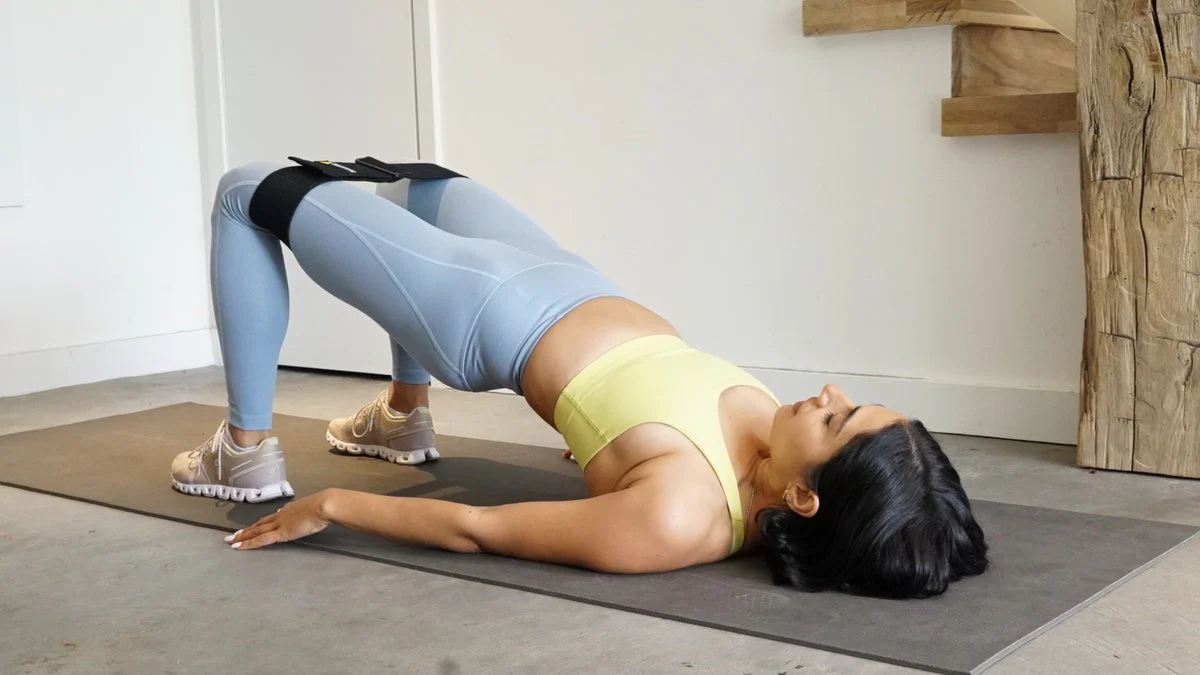
- Glute Bridges (Band Above Knees): Lie on your back with knees bent, feet flat. Loop a medium-resistance long band just above your knees. Press through your heels, lifting your hips while gently pressing your knees outwards against the band’s resistance. Lower with control.
- Lunges (Stepping on Band): Step on the middle of the band with your front foot, holding the ends. Step back with your other leg and perform a lunge, ensuring your front knee tracks over your ankle.
Core Crusher
- Pallof Press (Anchored): Anchor the band to a sturdy object at chest height. Stand perpendicular to the anchor point, holding the band with both hands at your chest. Press the band straight out in front of you, resisting the pull that tries to rotate your torso. Slowly bring it back. Fantastic for anti-rotational core strength.
- Wood Choppers (Anchored): Anchor the band high to one side. Stand facing the anchor point, holding the band with both hands. Rotate your torso diagonally downwards and across your body, as if chopping wood. Engage your core throughout.
Mastering Your Moves: Tips for Maximizing Workouts and Staying Injury-Free
To truly get the most out of your long resistance bands and keep injuries at bay, remember these crucial tips:
- Form Over Force: Always prioritize correct form over using the heaviest band. A lighter band with perfect execution will yield better results and prevent strain. If your form starts to break down, it’s a sign to lighten up.
- Progress Gradually: Don’t rush into higher resistance levels. Start with a lighter band to master the movement pattern, then slowly increase resistance as your strength improves. This progressive overload is key to muscle growth and strength gains.
- Warm Up and Cool Down: Just like with any workout, dynamic warm-ups prepare your muscles for action, and static stretches (often assisted by your long resistance band!) help improve flexibility and aid recovery.
- Inspect Your Bands Regularly: Before each use, quickly check your bands for any nicks, tears, or wear and tear. Damaged bands can snap, causing injury. Replace them if you notice any significant degradation. “Being mindful of your equipment’s condition is as important as your form,” advises Dr. Petrova. “A well-maintained band is a safe band.”
- Anchor Safely: If using a door anchor, ensure the door is securely closed and locked. Always pull the band towards the hinge side of the door for added safety.
Beyond the Burn: The Incredible Benefits of Long Resistance Band Training
Training with long resistance bands offers a treasure trove of benefits that extend far beyond simply breaking a sweat:
- Enhanced Muscle Strength and Toning: The continuous tension from bands challenges your muscles throughout the entire range of motion, leading to increased activation, strength, and definition.
- Improved Flexibility and Mobility: Bands are excellent tools for both dynamic warm-ups and assisted stretching, helping to gradually lengthen tight tissues and improve joint range of motion.
- Functional Fitness Gains: Many band exercises mimic real-life movements, building strength and coordination that translates directly to everyday activities like lifting, pushing, and pulling.
- Low Impact, Joint-Friendly: The elastic nature of the bands means less jarring impact on your joints compared to free weights, making them ideal for individuals with joint pain, those recovering from injuries, or anyone seeking a gentler yet effective strength workout.
- Unmatched Portability and Convenience: Lightweight and compact, long resistance bands can be easily tucked into a gym bag, suitcase, or even a drawer. This makes them the ultimate travel companion, ensuring you can maintain your fitness routine anywhere, anytime.
Seamless Integration: Weaving Long Resistance Bands into Your Daily Fitness Routine
The beauty of long resistance bands lies in how easily they can become a staple in your fitness journey.
- Your Go-To Home Gym: For home workouts, a set of long resistance bands can effectively replace a rack of dumbbells or even some bulky machines. You can target every major muscle group and switch up your routine frequently to keep things fresh.
- Travel-Friendly Fitness: Never miss a workout while traveling again. These bands are the perfect solution for hotel rooms, outdoor parks, or even a quick session in your office.
- Complementing Your Current Routine: If you already lift weights, long resistance bands can be integrated to add accommodating resistance to barbell movements (like banded squats or deadlifts), enhance warm-ups, or provide a fantastic finisher to exhaust muscles.
- Rehabilitation and Activation: Physical therapists frequently use long resistance bands for targeted muscle activation and rehabilitation exercises, helping to strengthen weak areas and restore movement patterns.
Frequently Asked Questions About Long Resistance Bands
How do I know which resistance level is right for me?
Start with a lighter band to learn the movement, then gradually increase resistance as you get stronger. Many brands use color-coding, but resistance levels can vary, so always check the product description or feel the band’s tension. It’s best to have a few different levels to suit various exercises and muscle groups.
Can long resistance bands build muscle like weights?
Absolutely! Research shows that training with resistance bands can be just as effective as traditional weight training for increasing muscle strength and size. The key is progressive overload – continuously challenging your muscles with increasing resistance or reps.
Are fabric or latex long resistance bands better?
Neither is inherently “better”; it depends on your preference and specific exercise. Latex bands offer more stretch and are great for dynamic movements and assistance. Fabric bands provide a non-slip, comfortable experience, especially for lower body work, and are less likely to roll. Many people choose to have both!
How often should I replace my resistance bands?
The lifespan of a resistance band depends on its material quality, frequency of use, and care. With regular use, latex bands may need replacing every 6-12 months, or sooner if you notice any signs of wear like nicks, thinning, or loss of elasticity. Fabric bands tend to be more durable. Always inspect your bands before each workout.
Can beginners use long resistance bands?
Yes, long resistance bands are excellent for beginners! Their progressive resistance means they’re easier on joints and allow for mastering form with lighter tension. As strength builds, beginners can smoothly transition to bands with higher resistance.
Conclusion
Long resistance bands are more than just a passing fitness trend; they are a fundamental tool that deserves a permanent spot in your workout arsenal. From their incredible versatility and portability to their unique ability to provide progressive, joint-friendly resistance, these bands offer a powerful path to building strength, improving flexibility, and boosting your overall fitness. So, why not give them a try? Grab a set of long resistance bands, explore the endless exercise possibilities, and feel the undeniable difference they can make in your quest for “Sức Mạnh Bền Bỉ.” Your body will thank you!