Have you ever found yourself searching for a versatile, effective, and convenient way to elevate your fitness journey, whether at home, in the gym, or on the go? Enter Resistance Bands, the unsung heroes of the fitness world. These seemingly simple elastic tools are revolutionizing how people build strength, improve flexibility, and achieve their health goals. If you’re ready to add a powerful, yet gentle, element to your workouts, understanding resistance bands is your first step towards a stronger, more resilient you.
What Are Resistance Bands and Why Are They So Popular?
At their core, resistance bands are elastic straps, loops, or tubes designed to provide tension against your movements, effectively challenging your muscles. Unlike traditional free weights where gravity dictates the resistance, resistance bands offer “variable resistance”—meaning the tension increases as the band stretches, engaging your muscles through the entire range of motion. This unique quality makes them incredibly adaptable for all fitness levels, from beginners to seasoned athletes.
Their soaring popularity isn’t just a fleeting trend; it’s a testament to their undeniable benefits. They are incredibly portable and lightweight, transforming any space into a personal gym. Think about it: a full set of resistance bands can easily fit into a small bag, making travel workouts a breeze. They are also significantly more affordable than bulky gym equipment, offering exceptional value. Furthermore, their joint-friendly nature makes them an excellent choice for individuals recovering from injuries or those who need a gentler approach to strength training, protecting joints while still providing ample challenge.
Different Types of Resistance Bands and How to Choose the Right Ones
Navigating the world of resistance bands can seem a bit daunting at first, with various shapes, sizes, and materials. But once you understand the main types, choosing the right band for your specific needs becomes straightforward.
Latex Loop Bands (Power Bands / Long Loops)
These are perhaps the most recognizable, forming a continuous loop of latex. They come in varying widths and thicknesses, which directly correlate to their resistance level—thinner bands offer lighter resistance, while wider, thicker bands provide heavy resistance. Power bands are fantastic for a broad range of exercises, from assisted pull-ups and squats to chest presses and deadlifts. Their versatility makes them a staple for full-body strength training and dynamic movements.
Fabric Loop Bands (Booty Bands / Short Loops)
Often shorter and wider than their latex counterparts, fabric loop bands are typically made from a blend of cotton and elastic. Their fabric construction makes them incredibly comfortable against the skin, and they are less prone to rolling or pinching during exercises. These bands excel in lower body workouts, perfect for glute activation, hip abductions, lateral walks, and squats. They’re a favorite for anyone focusing on building strength and stability in their hips and glutes.
Tube Bands with Handles
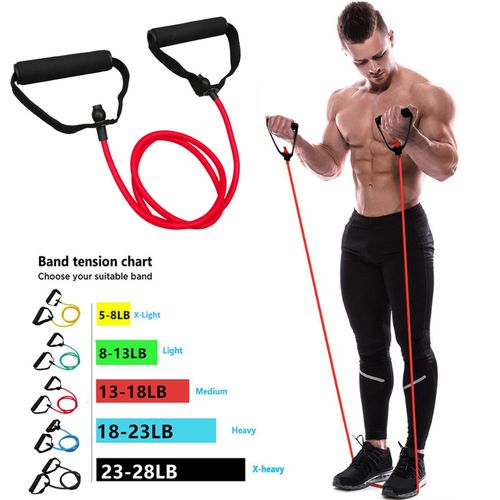
These bands resemble elastic tubes with soft handles attached at each end. They often come with door anchors, allowing for a wider array of exercises that mimic cable machine movements found in a traditional gym. Tube bands are ideal for upper body exercises like bicep curls, tricep extensions, and shoulder presses, as well as functional movements like rows and chest flyes. The handles provide a comfortable and secure grip, making them a great option for targeted strength work.
Mini Bands
Small, thin latex loops, mini bands are designed for focused muscle activation, particularly in smaller muscle groups. You’ll often see them used around the ankles or knees for exercises that enhance hip stability, glute engagement, and rotator cuff strength. They are excellent tools for warm-ups, pre-activation routines, and rehabilitation exercises where precise muscle targeting is key.
Choosing Your Band
When selecting your resistance bands, consider these factors:
- Resistance Level: Bands are usually color-coded, but the specific resistance associated with each color can vary by brand. Always check the resistance range (e.g., 5-15 lbs, 20-50 lbs) provided by the manufacturer. Start with lighter bands if you’re a beginner and gradually progress to heavier ones as your strength improves.
- Material: Latex bands offer excellent stretch and elasticity, making them highly versatile. Fabric bands, while less stretchy, provide superior comfort and stability, especially for lower body movements where rolling can be an issue.
- Fitness Goals: If your focus is glute work and lower body sculpting, fabric loop bands are a must-have. For full-body strength, assisted pull-ups, or extensive travel, long latex loop bands or tube bands with handles might be more suitable.
Effective Resistance Band Exercises for Various Muscle Groups
Resistance bands can truly challenge every major muscle group in your body. Here’s a look at some foundational exercises to get you started:
Lower Body Powerhouse
The lower body responds incredibly well to the continuous tension provided by resistance bands, making them superb for building strength and sculpting.
- Squats: Stand on a long loop band with feet shoulder-width apart, holding the other end at shoulder height. Perform a squat, pushing through your heels as you stand back up. This targets your quads, hamstrings, and glutes.
- Glute Bridges: Lie on your back with a fabric loop band above your knees. Pressing your knees slightly outwards against the band, lift your hips off the ground, squeezing your glutes at the top. This is fantastic for glute activation and hip strength.
- Lateral Band Walks: Place a mini band or fabric band around your ankles or just above your knees. Get into a slight squat position, then take small, controlled steps sideways, keeping tension on the band. This powerfully targets your glute medius, improving hip stability.
- Leg Press (Seated): Sit on a chair, loop a band around one foot, and hold the ends with your hands. Extend your leg straight forward against the band’s resistance. This isolates your quadriceps.
Upper Body & Core Strength
Don’t underestimate bands for your upper body and core. They provide unique resistance patterns that can effectively build muscle and improve stability.
- Bicep Curls: Stand on a long loop band with one or both feet, holding the band ends in each hand with palms facing forward. Keep your elbows tucked in and curl your hands towards your shoulders, squeezing your biceps.
- Tricep Extensions (Overhead): Hold a tube band with one hand behind your head and the other hand extending the band upwards. This isolates the triceps.
- Shoulder Press: Stand on a long loop band, holding the ends at shoulder height. Press the band overhead, extending your arms fully. This works your deltoids and triceps.
- Seated Rows: Anchor a long loop band or tube band to a sturdy object at hip height. Sit down, extend your legs, and pull the band towards your torso, squeezing your shoulder blades together. This targets your back muscles.
- Banded Push-ups: Drape a long loop band across your upper back, looping the ends around your hands. Perform a push-up. The band adds extra resistance, making the push-up more challenging, especially at the top.
- Pallof Press: Anchor a tube band to your side at chest height. Stand perpendicular to the anchor point, holding the band with both hands at your chest. Press the band straight out in front of you, resisting the rotational pull. This is an excellent anti-rotational core exercise.
Maximizing Your Resistance Band Workouts and Preventing Injury
To truly harness the power of resistance bands and stay safe, keep these essential tips in mind.
Tips for Optimal Performance
- Focus on Form Over Resistance: It’s tempting to grab the heaviest band, but perfect form is paramount. Dr. Lena Khan, a certified exercise physiologist, advises, “Always prioritize controlled movement and proper technique. A lighter band used correctly is far more effective and safer than a heavy band used with poor form.” Ensure your movements are slow and deliberate, especially during the eccentric (lowering) phase, to maximize muscle engagement.
- Progress Gradually: Just like with weights, progressive overload is key. As you get stronger, move to a band with higher resistance, increase your reps, or add more sets. You can also combine bands for customized resistance.
- Check Your Bands Regularly: Before each workout, quickly inspect your bands for any nicks, tears, or signs of wear. Damaged bands can snap, causing injury. Replace them as needed to ensure safety.
- Anchor Safely: When using a door anchor or wrapping a band around an object, ensure the anchor point is sturdy and secure. A door hinge or a heavy, stable piece of furniture will prevent slippage during your exercises.
The Transformative Benefits of Resistance Band Training
The advantages of incorporating resistance bands into your fitness regimen are extensive, impacting various aspects of your health and physical well-being.
Muscle Building & Toning
Yes, resistance bands absolutely build muscle! Research indicates that resistance band training can yield similar strength gains to traditional weight training. The constant tension throughout the entire range of motion, particularly at the peak contraction, provides a unique stimulus that can lead to significant muscle growth and toning. For instance, a bicep curl with a band challenges the muscle from start to finish, unlike a dumbbell where gravity’s role might lessen the tension at certain points.
Improved Functional Strength & Mobility
Functional strength, your ability to perform everyday movements with ease and efficiency, is greatly enhanced by resistance bands. They mimic natural muscle movements, improving coordination and stability. Furthermore, bands are excellent for improving flexibility and range of motion. “The controlled tension of bands allows for gradual stretching, which is crucial for increasing mobility and preventing injuries,” explains Dr. Khan. They’re often used in rehabilitation for exactly this reason.
Enhanced Joint Health & Injury Recovery
One of the standout benefits is their joint-friendly nature. Unlike free weights that can put significant stress on joints, resistance bands provide effective resistance without the impact. This makes them ideal for individuals with joint pain, recovering from injuries, or older adults looking to maintain strength without excessive strain. They can be used for targeted rehabilitation exercises, helping to strengthen supporting muscles around vulnerable joints.
Convenience & Accessibility
The sheer convenience of resistance bands is unparalleled. They are lightweight, compact, and incredibly portable, making them perfect for home workouts, travel, or even a quick session at the office. This accessibility removes common barriers to exercise, allowing you to maintain consistency no matter where life takes you. A quality set of resistance bands is also significantly more affordable than a full gym membership or an array of free weights, offering a cost-effective path to fitness.
Integrating Resistance Bands into Your Daily Fitness Routine
Resistance bands are incredibly versatile and can be seamlessly woven into almost any fitness routine.
- Warm-ups & Cool-downs: Use lighter bands for dynamic warm-ups to activate muscles and static stretches during cool-downs to improve flexibility. Mini bands are perfect for glute activation before leg day.
- Standalone Workouts: Design full-body workouts using just bands. You can challenge yourself with higher repetitions, shorter rest periods, or by combining different resistance levels for compound movements.
- Adding to Existing Routines: Incorporate bands into your traditional weightlifting routine. For example, add a band around your knees during squats or deadlifts to increase glute engagement, or use them for added resistance during push-ups or pull-ups.
- Travel Workouts: No gym? No problem! Pack your bands and get a comprehensive workout in your hotel room or outdoors. Their portability means your fitness routine never has to take a vacation.
Frequently Asked Questions (FAQ)
Do resistance bands build muscle effectively?
Yes, resistance bands are very effective for building muscle. They provide constant tension throughout an exercise’s range of motion, similar to free weights, and studies have shown they can lead to comparable strength gains. The key is progressive overload, gradually increasing resistance or repetitions as you get stronger.
Are resistance bands good for beginners?
Absolutely! Resistance bands are excellent for beginners because they offer a controlled way to introduce resistance without the heavy impact on joints associated with traditional weights. They help improve form and muscle activation, providing a solid foundation before progressing to heavier loads.
How long do resistance bands last?
The lifespan of resistance bands depends on their quality, material (latex vs. fabric), and frequency of use. High-quality latex bands can last several years with proper care, while fabric bands are generally more durable. Regularly inspect them for wear and tear, and replace them if you notice any cracks or loss of elasticity.
Can I use resistance bands for weight loss?
While resistance bands primarily build muscle, which in turn boosts metabolism, they can certainly contribute to weight loss. Combining resistance band workouts with a balanced diet and cardiovascular exercise creates an effective strategy for burning calories, building lean muscle mass, and improving overall body composition.
How do I clean my resistance bands?
Most latex resistance bands can be cleaned with a damp cloth and a mild soap solution. Allow them to air dry completely away from direct sunlight. Fabric bands can often be hand-washed or machine-washed on a gentle cycle, then air-dried. Proper cleaning prevents the buildup of sweat and dirt, prolonging their life.
Your Journey to a Stronger Self Begins Now
Resistance bands are more than just elastic loops; they are a powerful, accessible, and incredibly effective tool for anyone looking to enhance their physical strength, flexibility, and overall well-being. From diverse types tailored to specific needs to their undeniable benefits for muscle building, joint health, and functional fitness, these versatile companions are ready to transform your workouts. Embrace the continuous challenge they offer, integrate them into your routine, and experience firsthand how resistance bands can unlock a new level of strength and resilience in your fitness journey. Grab your bands and start building your “Sức Mạnh Bền Bỉ” today!