Are you looking for a versatile, effective, and incredibly accessible tool to transform your fitness routine? Look no further than Rubber Resistance Bands. These seemingly simple pieces of elastic have revolutionized home workouts, gym sessions, and even rehabilitation programs, offering a world of possibilities for building strength, improving flexibility, and boosting overall fitness, regardless of your experience level. They are the ultimate go-anywhere, do-anything fitness companion.
What Exactly Are Rubber Resistance Bands and Why Are They So Popular?
Rubber resistance bands are elastic strips or loops designed to provide tension when stretched, engaging your muscles in a similar way to free weights or machines. Unlike traditional weights that rely on gravity, resistance bands offer constant tension throughout the entire range of motion, which can lead to enhanced muscle activation and a more challenging workout. Their popularity has skyrocketed for several compelling reasons. They are incredibly affordable, making fitness accessible to everyone. Their compact and lightweight nature means you can stash them in a small bag and take your workout anywhere – to the park, on vacation, or simply moving from one room to another. This unparalleled portability, combined with their ability to effectively target every major muscle group, makes them a game-changer for modern fitness.
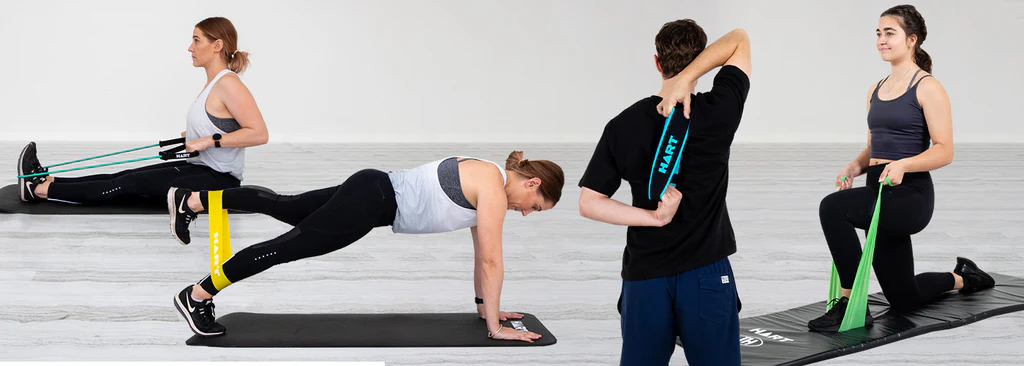
Navigating the World of Rubber Resistance Bands: Types and How to Choose
The world of rubber resistance bands is more diverse than you might imagine, with various types designed for different exercises and resistance levels. Understanding these differences is key to choosing the right tools for your fitness journey.
Different Types of Bands
- Loop Bands (Power/Pull-Up Bands): These are long, continuous loops of rubber, often thick and wide. They come in varying resistance levels, indicated by color, and are excellent for assisted pull-ups, squats, deadlifts, and compound movements.
- Tube Bands with Handles: Featuring a rubber tube with a handle at each end, these bands are ideal for exercises that mimic cable machine movements, such as bicep curls, tricep extensions, chest presses, and rows. The handles offer a comfortable grip.
- Mini Bands: These are smaller, often thinner loops, typically used around the ankles, knees, or thighs for targeting smaller muscle groups, particularly for glute activation, hip stability, and lower body sculpting.
- Figure-8 Bands: Shaped like an “8” with handles on each loop, these are great for upper body exercises, especially when you need a shorter range of motion, like chest flyes or shoulder presses.
Choosing the Right Resistance Band for Your Needs
Selecting the perfect rubber resistance band involves considering a few crucial factors:
- Resistance Levels: Bands are color-coded to indicate their resistance, ranging from extra light to extra heavy. Beginners should start with lighter bands to master form, gradually progressing to heavier bands as strength improves. It’s often beneficial to have a set with multiple resistances.
- Material: Most bands are made from natural latex rubber, which offers excellent elasticity. However, some fabric bands are also available, often preferred for comfort (especially mini bands that don’t roll up on skin) and durability. For traditional “rubber resistance bands,” latex is the standard.
- Workout Goal: Are you looking to build muscle, improve mobility, or assist with bodyweight exercises like pull-ups? Your goal will dictate the type and resistance level you need. For example, mini bands are excellent for glute work, while loop bands are better for compound movements.
When purchasing rubber resistance bands, look for reputable brands known for quality and durability. Check reviews and ensure the bands feel robust and have consistent resistance. A good quality band will last longer and provide a safer, more effective workout experience. Investing in a set that offers various resistance levels is often the smartest move, giving you options as you progress.
Unleashing Your Potential: Effective Exercises with Rubber Resistance Bands
The versatility of rubber resistance bands means you can get a full-body workout without needing any other equipment. Here are some effective exercises targeting different muscle groups:
Upper Body Power with Bands
- Band Rows: Anchor the band to a sturdy object or under your feet. Pull the band towards your torso, squeezing your shoulder blades. This builds back strength.
- Bicep Curls: Stand on the band, holding one end in each hand. Curl your hands towards your shoulders, keeping elbows tucked in.
- Tricep Extensions: Anchor the band overhead or step on it. Extend your arms upwards, focusing on squeezing the triceps.
- Overhead Press: Stand on the band with handles in hand. Press the band overhead, extending your arms fully.
Lower Body Strength & Stability
- Band Squats: Place a loop band above your knees. Perform squats, pushing your knees out against the band’s resistance. This activates glutes and outer thighs.
- Lateral Walks: With a mini band around your ankles or knees, take small, controlled steps sideways, keeping tension on the band. Fantastic for hip abductors.
- Glute Bridges: Lie on your back with a mini band above your knees. Drive through your heels to lift your hips, pushing your knees out.
- Lunges: Step on a tube band, holding the handles. Perform lunges, ensuring your front knee stays behind your toes.
Core Control & Ab Definition
- Band Crunches: Lie on your back, anchor a band to your feet, and hold the other end behind your head. Perform crunches against the band’s resistance.
- Pallof Press: Anchor a band to your side at chest height. Hold the band with both hands and press it straight out in front of you, resisting rotation. This is excellent for anti-rotational core strength.
- Russian Twists (with band): Sit on the floor, slight lean back, and hold the band taut. Twist your torso from side to side.
Smart Training: Tips to Maximize Results and Prevent Injuries
To get the most out of your rubber resistance bands and keep yourself safe, follow these smart training tips:
- Focus on Form: Proper technique is paramount. If you’re new to an exercise, use a lighter band until you can perform the movement with perfect form. Watch videos or consult a trainer if unsure.
- Progressive Overload: Just like with weights, to continue making gains, you need to progressively challenge your muscles. This can mean using a stronger rubber resistance band, increasing repetitions, slowing down the movement, or reducing rest time.
- Warm-up and Cool-down: Always begin your workout with a dynamic warm-up and finish with a cool-down and stretching to improve flexibility and prevent soreness.
- Inspect Your Bands: Before each use, quickly check your rubber resistance bands for any nicks, tears, or signs of wear. A damaged band can snap, causing injury. Replace worn bands immediately.
- Control the Movement: Avoid letting the band snap back quickly. Control both the concentric (muscle shortening) and eccentric (muscle lengthening) phases of the exercise for maximum muscle engagement and safety.
The Game-Changing Benefits of Training with Rubber Resistance Bands
“Using rubber resistance bands isn’t just about convenience; it’s about smart training,” says Dr. Elena Rodriguez, a leading physical therapist and fitness coach. “They offer constant tension throughout the movement, which can be incredibly effective for muscle engagement and rehabilitation.” The benefits of integrating rubber resistance bands into your routine are numerous and impactful:
- Full-Body Workout Anywhere: Their portability means your gym is wherever you are, allowing for consistent training.
- Increased Muscle Activation: The continuous tension provided by rubber resistance bands can lead to greater muscle fiber recruitment compared to free weights, especially at the peak of contraction.
- Joint-Friendly: Bands provide resistance without the impact often associated with heavy weights, making them excellent for individuals with joint issues or those recovering from injuries.
- Versatile and Adaptable: From strength training to flexibility, rehabilitation, and even speed training, bands can be used for a wide array of fitness goals.
- Cost-Effective: Compared to gym memberships or expensive equipment, a set of high-quality rubber resistance bands is a minimal investment for maximum return.
- Improved Mobility and Rehabilitation: Physical therapists frequently use rubber resistance bands to help patients regain strength and range of motion after injuries, thanks to their controlled resistance and low impact.
Seamless Integration: Adding Rubber Resistance Bands to Your Daily Routine
Incorporating rubber resistance bands into your daily life is easier than you think. They are incredibly adaptable and can serve multiple purposes:
- Standalone Workouts: Design full 30-45 minute workouts using only bands. Focus on compound movements and supersets to keep your heart rate up.
- Enhancing Free Weight Exercises: Add a band to your barbell squats or deadlifts for accommodating resistance, making the top portion of the lift more challenging.
- Travel Companion: Never miss a workout when you’re away from home. A few bands take up virtually no space in your luggage.
- Dynamic Warm-ups: Use mini bands for pre-workout glute activation or shoulder warm-ups to prepare your body for more intense activity.
- Cool-downs and Stretching: Bands can assist with deeper stretches, helping to improve flexibility and aid recovery.
Frequently Asked Questions About Rubber Resistance Bands
Q: Are rubber resistance bands as effective as weights?
A: Yes, rubber resistance bands can be incredibly effective for building strength and muscle. While they differ in how they provide resistance (constant tension vs. gravity), studies show they can lead to similar strength gains when used correctly and progressively.
Q: How do I know what resistance level to start with?
A: Start with a lighter rubber resistance band that allows you to complete 10-15 repetitions with good form but still feels challenging by the last few reps. You should feel your muscles working, but not struggling to maintain control.
Q: Can rubber resistance bands help with muscle growth?
A: Absolutely! By providing adequate tension and allowing for progressive overload (gradually increasing the resistance or reps), rubber resistance bands can effectively stimulate muscle hypertrophy (growth).
Q: How often should I train with resistance bands?
A: You can train with rubber resistance bands 3-5 times a week, just like with traditional weights. Ensure you give each muscle group adequate rest (typically 24-48 hours) between intense sessions.
Q: What’s the best way to store my rubber resistance bands?
A: Store your rubber resistance bands in a cool, dry place away from direct sunlight, which can degrade the rubber over time. Keep them neatly coiled or hung to prevent tangling and damage.
Q: Are fabric resistance bands better than rubber ones?
A: Neither is inherently “better”; they serve different purposes. Fabric bands are often favored for lower body exercises (like mini band squats) as they are more comfortable, don’t roll up on the skin, and tend to be very durable. Rubber resistance bands offer a wider range of motion and versatility for both upper and lower body workouts.
Conclusion
Rubber resistance bands are far more than just a passing fitness fad; they are a fundamental tool that offers incredible value, versatility, and effectiveness for anyone looking to improve their physical health. Whether you’re a seasoned athlete or just starting your fitness journey, these portable powerhouses can help you build strength, increase flexibility, aid recovery, and achieve your fitness goals from anywhere. So, grab a set of rubber resistance bands, embrace the challenge, and start experiencing the profound benefits they can bring to your body and your active lifestyle. Your stronger, more resilient self awaits!